
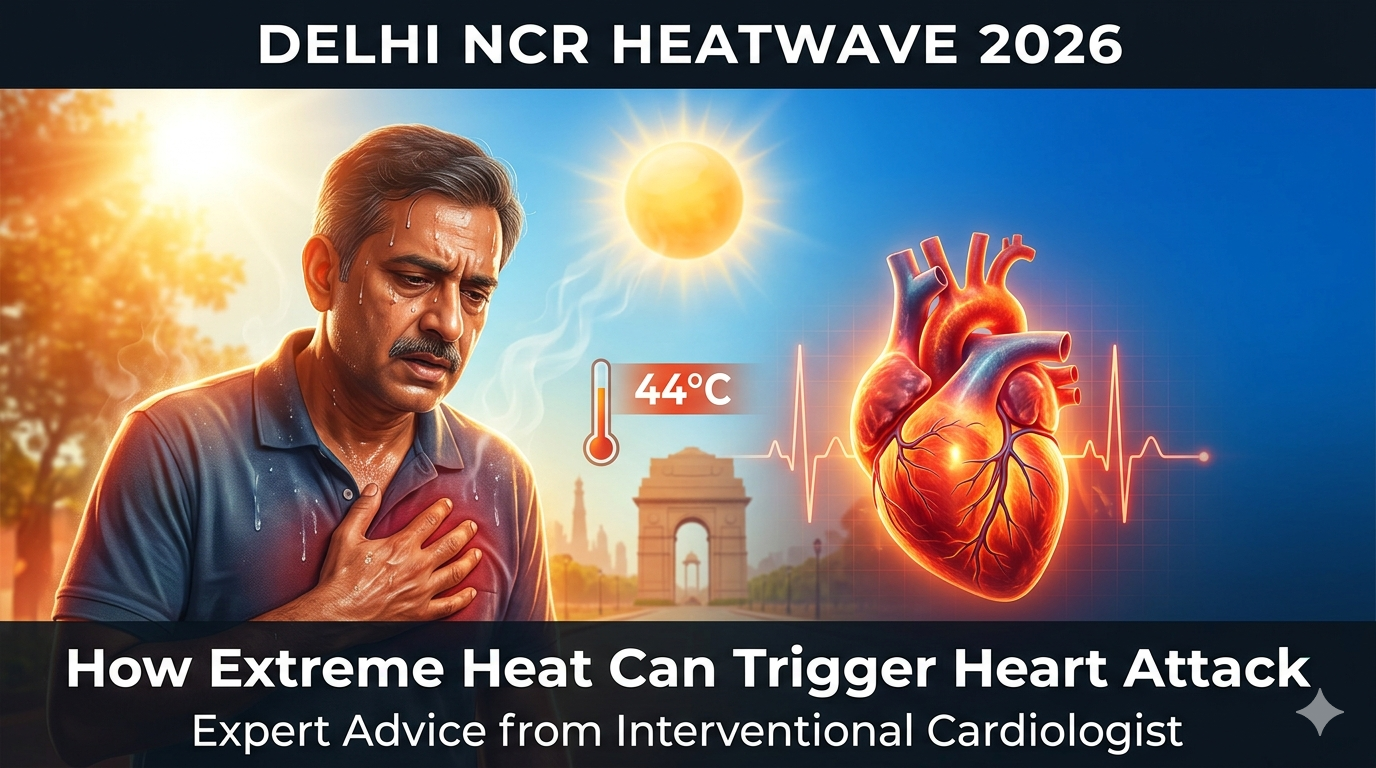
As we head into April-May 2026, Delhi NCR is already feeling the heat. Temperatures have crossed 42-44°C in many areas, with heatwave alerts issued earlier than usual. While we all know summer brings discomfort, few realize how dangerously it stresses the heart – especially for people with high blood pressure, diabetes, previous stents, or heart conditions.
As an interventional cardiologist practicing in Delhi NCR, I see a clear surge in cardiac emergencies during these months. Here’s a clear, practical guide on why heat is risky for your heart and what you can do to protect yourself and your loved ones.
Why Extreme Heat Puts Your Heart at Risk
Your body works like an engine. In extreme heat, it must cool itself down while continuing all normal functions. Here’s what actually happens:
- Increased Cardiac Workload: Blood vessels near the skin dilate to release heat. The heart must pump more blood — sometimes twice the normal volume – to the skin surface. Heart rate rises and blood pressure can fluctuate wildly.
- Dehydration Effect: Sweating leads to fluid loss. Blood becomes thicker and more prone to clotting. This raises the risk of blockages in coronary arteries.
- Electrolyte Imbalance: Loss of potassium, sodium, and magnesium can trigger dangerous arrhythmias (irregular heartbeats).
- Combined with Pollution: Delhi NCR’s air quality often worsens in summer. Fine dust particles + heat create a double blow to heart and lungs.
Studies and local hospital data from this season show that cardiovascular events (heart attacks, heart failure exacerbations, and arrhythmias) rise significantly when temperatures stay above 38-40°C for several days. People over 55, outdoor workers, and those with existing heart disease face the highest risk.
Warning Signs You Should Never Ignore in This Heat
Heat-related heart problems don’t always present with classic chest pain. Watch for these symptoms, especially if they appear suddenly or worsen with activity:
- Unusual fatigue or weakness that doesn’t improve with rest
- Shortness of breath even while sitting
- Dizziness, light-headedness, or fainting
- Palpitations (feeling your heart racing or skipping beats)
- Chest discomfort, jaw pain, or arm heaviness
- Excessive sweating (or sudden stop of sweating with hot, dry skin – a sign of heatstroke)
- Swelling in legs or ankles that worsens rapidly
If you or a family member experience these, seek emergency care immediately. In Delhi NCR, don’t wait in traffic – call an ambulance or head to a hospital with 24×7 cath lab facilities.
Practical Prevention Tips for Delhi NCR Residents
- Stay Hydrated Smartly Drink 3-4 litres of water daily (more if you’re active). Add oral rehydration salts (ORS) or coconut water. Avoid excessive tea, coffee, or alcohol – they dehydrate you further.
- Beat the Peak Heat Stay indoors between 11 AM and 4 PM. Schedule walks or errands for early morning or after sunset. Use air conditioning or coolers wisely.
- Medication Caution Many heart medicines (diuretics, beta-blockers, ACE inhibitors) increase heat sensitivity. Never stop them without consulting your doctor, but get your doses reviewed before peak summer.
- Diet Adjustments Eat light, home-cooked meals. Include fruits like watermelon, cucumber, and oranges. Limit salty, fried, and heavy foods that raise blood pressure.
- Monitor Your Body Keep a home BP monitor and weigh yourself daily. Sudden weight loss can indicate dehydration. Track symptoms in a simple diary.
- Special Advice for Heart Patients
- Post-stent or bypass patients: Avoid direct sun exposure. Wear loose, light-coloured cotton clothes and a wide-brimmed hat.
- If you feel more tired than usual, get an ECG or check-up early – don’t wait for a full-blown episode.
When to See an Interventional Cardiologist
If you have risk factors (hypertension, diabetes, high cholesterol, family history, or previous heart procedure) and notice any new symptoms during this heatwave, don’t delay. A timely check-up, stress test, or angiography can prevent major events. Many blockages we treat with angioplasty and stenting become urgent during summer months.
Final Message
This 2026 heatwave is testing all of us, but simple awareness and precautions can save lives. Your heart is working overtime – give it the support it needs.
At Fortis Escorts Heart Institute, Okhla in Delhi NCR, we are fully equipped with advanced cath lab facilities for any emergency interventions. If you or your family need guidance, feel free to book a consultation.
